Showing posts with label economic development. Show all posts

Monday, April 25, 2011

How can hundreds of millions of something - anything - be scarce?


I sat next to Jim Rogers on a panel once (so you don't think I'm just making this up), and he told me that right up there with all the other unstoppable so-unbelievably-massive-you-don't-think-it's-possible changes sweeping the world is how China's gender imbalance will soon make young Chinese women among the world's rarest commodities. Yes, all hundreds of millions of young Chinese women will be relatively scarce.

[Today I read about quality on top of the quantity effect. To be clear, this is a parody of Amy Chua - so this part in brackets at least is in jest).]

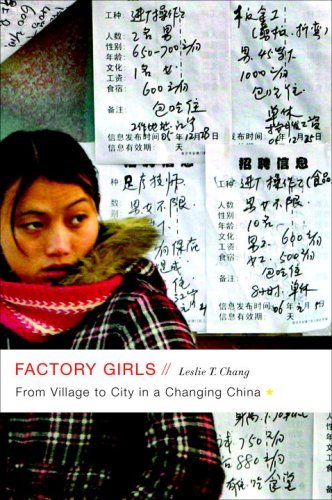
Hand in hand with this increase in the market's shadow price - economic power - will be a steep escalation in the real power of women, both personal and political. This is not to deny the harrowing experiences documented in Leslie Chang's Factory Girls but there is, at the same time, no question that there has been a dramatic upgrading of the position of women throughout Asian society, and therefore of women worldwide.

No legislation was involved. No protest movement occupied a city square. All this occurred simply through the power of economic growth, the balance between demand and supply, and the force of market equilibration. If you don't yet see this, just come take a look at the confidence, poise, and ambition of the tens of thousands of young Mainland Chinese women studying in secondary schools, junior colleges, and universities in Singapore, elsewhere in Southeast Asia, or in the West. Come take a look at LSE, for that matter.

Perhaps once again China's headlong rush for economic growth and the staggering power of markets adjusting to demand and supply in the hundreds of millions will quietly, brilliantly do what the rest of the world has found so difficult. China lifted over 600 million people out of extreme poverty over the last quarter of a century, when no one else was looking - and therefore when no one was giving China foreign aid or telling it how to run its schools.

This time, for elevating yet another disadvantaged community will China, once again, quietly using just growth and markets achieve more than all other efforts micro-managing around the edges of global poverty?

PS Many readers, of course, quickly link in their mind this gender imbalance to the many horrific tales one hears emerging from China's one-child policy. If 119 boys are born for every 100 girls - as usually reported for China - then that works out to 840 girls to 1000 boys. Given China's population of 1.3 billion, this means 24 million Chinese men of marrying age without spouses by 2020.

It is instructive if grim to note this gender bias is seen as well in the very differently-governed India where the 0-6 age group now has 914 girls to 1000 boys (down from 927/1000 in 2001), confirming how the country has become "a terrifyingly hostile place to be conceived or born a girl", pointed out to me by Vinayak @kayaniv.

Monday, April 18, 2011

The global economy's shift. Follow-ups all over

In January 2011 Martin Wolf wrote an introduction to my article The global economy’s shifting centre of gravity in Global Policy but decided not to follow it up himself.

Recently, the article has seen some coverage in the international media.

I'm not lazy, not really. But if I divert all these writeups into just this blog, reader comments are lost as they remain on the original website. And those comments are, well, some of the most interesting things I get to read regularly.

So WSJ's Chris Shea The pull of economic gravity 2011.03.19, CNN's Global Public Square 2011.04.07, NYT's Catherine Rampell 2011.03.24, FT's Alphaville 2011.03.23, and even FT's John Gapper 2011.03.24, who calls me "Mr Shah" (Damn you, Autocorrect), are best left in their native domains. There are items to aid teaching (econlife 2011.03.27), posts in languages I don't completely understand (Javier Andres's East Wind, West Wind 2011.04.14), versions souped-up into colorful alternate projections (Anders Sandberg's 2011.04.15), interpretations from different parts of the world and therefore providing, literally, different perspectives (2.6 billion 2011.03.25), and, not least, reactions from friends like Bill Easterly, as in his Should the West get hysterical?2011.03.23.

Of the many different comments, I found particularly memorable:


By the way, it's intriguing to find people saying that what you write are things they already know, and when you ask them how they know it, they say, Everyone has been saying these things for a while now. In my experience, just as many people say the opposite. Either way, whatever you find with hard work on real data, you can't win.

I'm not complaining. Just saying.

Friday, July 30, 2010

The global economy's shifting centre of gravity

Define the global economy's centre of gravity to be the average location of economic activity across geographies on Earth. If you go grab incomes and geographical location data across nearly 700 identifiable places on the planet (World Development Indicators Online, Asian Development Bank, Google Earth, Brinkhoff; Grether and Mathys) you will see that in 1980 the global economy’s centre of gravity was mid-Atlantic. You will also see that by 2008, from the continuing rise of China and the rest of East Asia, that centre of gravity has drifted to a location east of Helsinki and Bucharest. Extrapolating growth in almost 700 locations across Earth, gives you the world’s economic centre of gravity shifting by 2050 to literally between India and China. Observed from Earth’s surface, that economic centre of gravity will move from its 1980 location 9300 km or 1.5 times the radius of the planet.

A graphic illustration of this is given in the Figure. The dots in black are 1980-2007; those dots reduced and in red are for 2010-2049 in an extrapolation. The center of gravity calculations are performed in 3-dimensional space and then projected onto the normal cylinder tangent to the planet at the equator.


My paper with the same name as this post describes more fully the ideas here.

(Thanks to Google Earth for help with this. To transform a 3-dimensional sphere into an unfolded 2-dimensional flat plane, the mapping is not a Hilbert space projection. For one, the tangent normal cylinder is only locally linear; it is therefore not a linear space. I calculated the dynamics using R; I generated the sequence of world maps in python; and I then used gimp and ImageMagick batch-processing to produce the final animation.)

Wednesday, April 14, 2010

Malaysia's New Economic Model: Making choices

In June 2009, Malaysia's Prime Minister Datuk Seri Najib Razak asked if I would serve on his council of economic advisors, the National Economic Advisory Council (NEAC). This Council was to come up with a New Economic Model for the country. It would not be a group that got together every month to finetune the economy. This Council was not to sift through the entrails of inventory reports, and propose economic policies to lean against the wind.

1. Background
No, the task assigned the NEAC was to put Malaysia back on a high-growth path, reinstating Vision 2020 that Malaysia would within these next 10 years achieve the status of a developed nation. Council was to do this against a post-1997 background of annual economic growth having nearly halved; investment as a fraction of GDP having plummeted to 50% what it used to be (private investment, to one third); with the economy relying on a workforce of which four-fifths were educated only up high-school level while over one quarter of local public university graduates remained unemployed 6 months after graduation, and with the human capital brain-drain becoming freshly re-energized (350,000 Malaysians in 2008 lived and worked abroad, half of them with university education).


By 2007, Malaysia seemed as far from the World Bank's notion of a high-income economy as a decade earlier, in contrast to economies such as Slovakia, the Czech Republic, and Poland, all of whom had by 2008 broken through that high-income boundary but had earlier been roughly level with Malaysia.

Yet, Malaysia had been previously identified by the Spence Commission on Growth and Development as one of only 13 countries in the world that had for more than 25 years grown at rates exceeding 7% annually. At different times since the 1960s, despite having a population not even one-third the UK's, Malaysia had been the world's largest producer of tin, of rubber, and of palm oil.

Today, forty percent of Malaysia's households earn less than US$15 a day (RM1500 a month), two thirds the World Bank's low-income threshold. With Malaysia's domestic income distribution what it is, only one million people pay income tax at the highest rate of 26%; there is no goods and services tax. Oil and gas revenues have, on occasion, provided up to nearly half the government's total revenues, although by 2014 Malaysia is expected to become a net importer of oil. As much as 20% of the nation's public expenditures routinely get spent on subsidies that keep prices of basic goods low but distort reality for Malaysia's citizens.

Certain policy questions - for instance, monetary control and inflation; financial markets oversight, regulation, and development - are outside the NEAC's remit, and rightly so. In Malaysia, all those issues were taken care of by others, and already attain world-class standards of performance.

The large facts I've just described seemed to me (and many other observers) precisely the ones raising the critical, first-order challenges for economic policy in Malaysia. The problem was how to organize them coherently and understand their resolution. But there is, further, the other critical, first-order challenge unmentioned so far: namely, Malaysia's 40-year-old program of affirmative action.

I say unmentioned but of course that is not how the outside world viewed this. The international press emphasized most of all this dimension to Malaysia's policy framework; I will bring this out further in the discussion that follows. For now, however, I just note that some foreign financial houses I spoke to about NEAC work downplayed the significance of all the other problems I have mentioned. They said to me, "Malaysia needs to fix its affirmative-action program; everything else follows."

That proposition, by itself, is almost surely demonstrably false. On the other hand, the perception is obviously one that colors the views of many market participants who actually shift significant financial resources.

Article 153 of Malaysia's Constitution, ratified in 1957, requires that the King protect the special position in Malaysia of the Bumiputras (ethnic Malays and a small number of other indigenous groups). The Article allows the federal government to protect Bumiputra interests by establishing quotas for public scholarships, public education, and the civil service.

In 1971, following racial riots, declaration of a state of national emergency, and suspension of Parliament, the then-Prime Minister Tun Abdul Razak---father of the current Prime Minister---introduced the New Economic Policy (NEP). This policy sought to eradicate poverty regardless of race and to eliminate the identification of ethnicity with economic function. The enabler for both these goals would be rapid economic growth, the speedy expansion of the economic pie to divide across all Malaysians, so that no subgroup would feel absolutely disadvantaged. A key feature of the NEP was its effort to raise Bumiputra equity ownership from 2.4% in 1971 up to 30% within two decades.

What has NEP progress been? At a fixed absolute income threshold (its exact value holding no significance as long as it's fixed and applies across the board), poverty rates for Bumiputras declined from 65% in 1970 to 5% in 2007, while that for Malaysians overall, from 49% to 4%; Chinese, 26% to 1%; Indians, 39% to 2% (Table 4, p. 57, NEM). Wealth figures are widely disputed but most sources give Bumiputra equity ownership of 2--4% in 1971; official KL Stock Exchange statistics suggest Bumiputra shares of 29% by 1990 and 37% by 1996.

That was the background when in August 2009 PM Najib Razak delivered his keynote speech at the NEAC's inaugural meeting, asking Council for ideas and direction to transform Malaysia into a developed nation by 2020. Malaysia, having successfully drawn foreign investment as low-cost producer was populated with businesses that, at the margin, had neither incentive nor vision to climb the quality ladder. Infrastructure and expertise in key areas remained under-developed. For Malaysia as small open economy, the global trading environment has already shown time and again how it could change suddenly, as it had just done during the 2008 global financial crisis, and further looked set to change even more dramatically but less suddenly from longer-term global carbon considerations. Reforms already begun in Malaysia by the Central Bank, the Securities Commission, and others were already liberalizing capital markets and taking forwards expertise and comparative advantage in Islamic Finance. Government transformation work had already begun to introduce meritocracy and performance measurement in the public sector itself.

What could Council do to help Malaysia re-locate its strategic position in the global economy?


2. The New Economic Model

In the ensuing six months, Council met 4 times in Kuala Lumpur. At these meetings, Council members listened to presentations, mapped strategic visions, and debated subtle differences in emphases. Now and then, we would as a group take such a big-picture perspective that we would form a collective blindspot over the single largest difficulty in whatever we were discussing, completely missing the key concern. Now and then, we would micro-drill down and heatedly argue over whether the appropriate punctuation should be a comma or a semi-colon. But all of us remained energetic and enthusiastic and committed, and sometime during the 15 hours of meeting each day, or in seemingly interminable rounds of email 24/7, we would correct course and converge on the right balance.

We agreed our report had to be in two steps: First, to identify, propose, and persuade on the over-arching framework and strategic vision; second, to steer from that vision its delivery to be led by the executive branch and implemented by the civil service. Without successfuly convincing on the first, the second would never be executed. Without successfully executing the second, the first would have been in vain.

The single big-picture vision was that Malaysia had to become an advanced economy by 2020. Sure that included the Malaysian economy generating sufficiently high income. But that vision also included a subtext of inclusiveness - so that the poorest and most vulnerable in society would be taken care of - and one of sustainability, so that higher economic growth would continue into the future, not at the expense of degrading the environment for generations to follow.

Council concluded many of Malaysia's malperforming situations were inter-linked. Underperformance in one setting was the rational response to underperformance in the next: Why work hard in school if you're convinced it doesn't benefit you afterwards? Why work hard in your job if your productivity is held back by so many unskilled around you? In these circumstances, what is needed is a big push to break out of that vicious circle of under-performance. But disruption would be needed not just in your own circle of school-mates and colleagues, but everywhere in the economy. Hence, we emphasized the big push of economic transformation needed to break the logjam of entrenched, special interests. We sought to build momentum and confidence in the mindset of citizens that more positive changes would continue to emerge but all of us needed to keep pushing.

This economic transformation would come with reform along eight strategic initiatives - slightly more concrete but only slightly:
  1. Re-energize the private sector so it could lead the process of economic growth;
  2. Develop a high-quality workforce;
  3. Create a competitive domestic economy;
  4. Streamline and make efficient the public sector as facilitator for private enterprise, when in the past large government-linked corporations (GLCs) had been viewed as competitors instead;
  5. Move to affirmative action that is (a) transparent, (b) market-friendly, (c) merit-based, and (d) conditioned on need ;
  6. Build infrastructure for a knowledge base;
  7. Enhance the sources of growth;
  8. Ensure the sustainability of growth.

Early on, Council decided it couldn't be swayed by arguments about whether it was doing something truly novel or new or different. The only thing that mattered should be whether a proposal for implementation was likely to succeed and whether it would bring the highest benefits to the greatest number. Good ideas are hard enough to come by generally; why straitjacket oneself to not look at certain of them? This isn't an exam: why not copy good ideas however and wherever you find them?

Nonetheless, having come to the end of putting in place the over-arching vision, we could see several ways where our approach differed from earlier ones.

First, we focused on growth through enhancements in productivity, not the sheer brute force of capital accumulation. It's not that we ignored the latter - if we had, we wouldn't have expressed concern about the sharp fall off in Malaysia's investment. Instead, it is that we figured it would be innovative processes and cutting-edge technologies that would provide the surest platform for Malaysia's producing high value-added goods and services in the future.

Second, we envisioned economic growth being private sector-led and market-driven, no longer dominated by large public investment through GLCs in selected economic sectors.

Third, we described the benefits of the government moving towards local autonomy in decision-making. State and local authorities needed to be empowered to develop and support more of their own growth initiatives - without unnecessarily duplicating function or project. While flat-out competition to produce identical public goods, over and over, would be obviously wasteful, a little competition between local authorities is healthy.

Fourth, we wanted to encourage local geographies to emerge - whether in clusters or corridors - as long as they exploited economies of scale and concentration, and thus raised productivity over the long term.

Fifth, we saw the need for continuing government support of private industry, as long as that support was geared towards innovation, entrepreneurial risk-taking, and high value-added goods and services. It would be those general principles that guided support, not past principles of picking winners.

Sixth, we welcomed talent and skills from everywhere: as long as anyone, local or foreign, is able to contribute to Malaysia's transformation to an innovative, high-value added economy, they would be accepted and welcomed.

Finally, we emphasized how the global economy was changing, and we figured Malaysia's strategic position within it needed to re-orient as well. For the entire 20th century, the world's strongest economic powers have been the US, Western Europe, and Japan. Malaysia, like many others, tuned production and supply networks to service those markets. While we weren't arguing that policy should be based on the economic centre of the world suddenly shifting tens of thousands of kilometers east, we felt that it was reasonable to acknowledge the change in that global landscape, and to develop further new regional networks centred on the fast-growing, Asia-focused emerging economies.

In a nutshell, that's it. That's the New Economic Model (NEM).


3. After, for now

For a relatively technocratic problem and solution, the NEM announcement on 30 March by PM Najib attracted unexpectedly heavy attention from the international press. All the major world press worked in discussion of Malaysia's affirmative action program, both historical and prospective. The New York Times (30 March 2010) described the revision of Malaysia's policy to focus on need, not race.

The Wall Street Journal ran articles on two successive days (30 March, 01 April 2010), talking about the recalibration of Malaysia's decades-old affirmative action and asserting how "the New Economic Policy has hindered Malaysia's competitiveness in recent years. The U.S. and European Union have singled out Malaysia's insistence on maintaining preferences for ethnic-Malay owned businesses in government procurement contracts for stalling the development of free-trade pacts". The Journal's Opinion Asia column (01 April 2010) contextualized PM Najib's speech by observing how 'A few years ago it was inconceivable that a Malaysian premier would express dissatisfaction with the "rent-seeking and patronage" inherent in the country's four-decade-old affirmative action policies and call for a more "transparent" system based on merit and need. Former strongman Mahathir Mohamad used to label people with such ideas "extremists."'

Great cynicism continues to be expressed by some of my friends, Malaysian and otherwise, who say they have seen over the years many politician promises made only to be broken subsequently. Personally, however, I see great optimism instead. Why? I contrast PM Najib's 30 March speech with what I imagine someone wanting an easy ride through life might have said, in light of both the general skepticism and fervent fear-mongering in the runup to the event.

Two days before the NEM announcement, Kevin Brown wrote in the Financial Times (28 March 2010) how there was "widespread doubt" that PM Najib would take any political risk at all of dismantling Bumiputra special privileges, not least in a new economic model that might greatly dilute that historical affirmative action. James Hookway's Wall Street Journal article of 22 March 2010 gave considerable space to Ibrahim Ali, a right-wing extremist Malay MP, and to Perkasa, the NGO that Ibrahim Ali founded devoted to defending Malay rights, reporting how "Mr. Ibrahim reckons Mr. Najib is misreading the depth of anger many Malays feel toward any change in a policy that has given many a leg up and helped to build a large middle class." The Economist newspaper (11 March 2010) extrapolated from their interview with Najib and with others to sub-lead their article, "Najib wavers over undoing affirmative-action policies".


Not least, of course, there is the now-infamous interview Ibrahim Ali granted Al-Jazeera on 29 March 2010, the eve of the launch of the NEM, where Ibrahim Ali gets bleeped three times speaking, with some vitriol, on the position of other races in Malaysia.

Domestic reporting too emphasized the emerging political tensions (e.g., Malaysian Insider, 04 March 2010; 28 February 2010; and many others). And the Malaysian blogosphere - sometimes thoughtful and insightful; sometimes not; always vicious - don't even go there.

Now, contrast what PM Najib actually said with what all these observers predicted he would say. Think of the political onslaught, the wavering, the self-protection going on around him. If Najib had wanted an easy way out, he could have taken it and no one would have been surprised. He didn't. He continues along that difficult but worthwhile path.

One final comment. In this international reporting, by far the greatest attention has gone towards Malaysia's New Economic Policy and its possible adjustment. In Council's work, we knew this was important, but so too were all other seven strategic initiatives. Affirmative action matters. No significant advanced country in the world gets by without affirmative action programs of some kind - it is in human nature to take care of the weakest and most vulnerable in our society. So too for the members of Council, where that bottom 40% of the Malaysian population is targetted to receive significant help and attention. But fixing all the other problems matters too: it's one big push for all of them.

Council has now finished Step 1. Step 2 starts. Everyone likes to say, Now the hard work begins - as if I've never heard that one before. But I am energized. I continue to do this work (and, for the record, for practically no pay compared to outside options) because I think things actually are looking up in Malaysia.

(This appeared also on Wednesday 14 April 2010 Business Times, New Straits Times Malaysia B4ff and, in Chinese, in Sinchew Daily, again 14 April 2010.)


Friday, April 02, 2010

Economics is a martial art

A scream for help from the alleyway; what do you do? Move in cautiously but quickly? Or hold back because you worry that the whole thing might get messy?

Do you fret that you haven't yet published the perfect model of these kinds of social dynamics and that until you do, you might do more harm than good? Or that you won't have the credibility? Credibility for what, for standing up to street hoodlums?

Do you let someone else look into this? Who, people not as well-trained and not as physically fit as you? People without your punching and kicking abilities and your instincts honed from years of practice in a safe training environment?

Do you stand on the sidelines and criticize those trying to help for not dispatching the hoodlums faster?

What if you realize the scream is your mom or your kids or anyone else who looks to you to protect them? What do you do?

They're not asking for perfect certainty and total rigor. They just want to be safe again. You can't tell them this isn't really what you were trained for, that you are much more a kicker whereas these hoodlums will likely be better dealt with by grappling or boxing. You are there, you are physically fit, you have a reaction time faster than those of others around you. That's all they expect of you. That's all that should matter.


So too in economics.

You don't have to be the world's top martial artist street fighter. Or the world's deepest thinker on economic policy. You don't have to expect to come out of every street situation or every economic policy encounter unscathed, whether physically or in reputation.

You just have to do a bit of good in the world. And the more of you there are, the more the bad guys lose.

(Photo credit: Cung LE is a Vietnamese-American kickboxer and mixed martial artist. Following the fall of Vietnam, he came to the US where bullying forced him to learn to fight. In March 2008 he became Strikeforce Middleweight champion by TKO when a sequence of powerful kicks ended up breaking his opponent's right arm.)

Saturday, November 15, 2008

Martial arts on the mean streets of East Asia

In his book Angry White Pyjamas Robert Twigger, the prize-winning poet and author, and martial artist, describes how in the 1930s Gozo Shioda would prowl the streets of Kabuki-cho Tokyo, looking to fight street gangs and test his martial arts skills.

Decades after, Gozo Shioda went on to establish the Yoshinkan style of aikido.  In the eyes of some, Shioda and his teacher Morihei Ueshiba were at one point Japan’s greatest martial artists.

Ueshiba used to tell his students “On no account go looking for fights.”  Shioda, like many other good martial arts students, completely ignored his teacher on this.  

Instead, out of the situations in which Shioda constantly found himself, he formulated his own rules, like “In a fight against many, always make the first blow count against the strongest man.”

Shioda felt that you only really understand what aikido is when you have to use it in life-or-death situations.  His own aikido-enlightenment moment came when, cornered by four gang members, he used aikido techniques to break the arm of one of his attackers and the leg of another, and incapacitated a third by a single punch to the solar plexus.  According to Shioda's autobiography he appreciated only then how aikido wasn’t something you just practiced in a safe environment.

I have friends who train in aikido but I myself do taekwon-do, the birthplace of which is Korea.  So, that balmy July evening in Seoul when my taekwon-do training partner James and I came out of his dojang, we reminded one another of what Ueshiba and Shioda would have said, had they been walking Seoul’s crowded streets alongside us.  James, who has started training seriously in hapki-do as well, pointed out to me how in modern Korean language you say taekwon-do players but hapki-do fighters.

Every street corner in Seoul has over a dozen schools of taekwon-do and hapki-do.  Every shaded doorway has darkened stairwells leading up to a brightly-lit dojang.  Martial arts training is everywhere.

The other thing found everywhere in Seoul is free WiFi.  When you land in most airports in the world, service providers try to sell you a pay-as-you-go SIM card so you can use your cellphone without incurring high roaming charges.  At Incheon and Gimpo, they try to get you to rent a Skype handset instead.  Why call over cellular networks when you can just log in to the Internet on a cellphone handset, and transmit via VOIP for zero marginal cost?

I think that is truly cool.  It just makes so much sense.

South Korea’s 15-year-olds score highest in the world at problem-solving skills, way ahead of the US, the UK, France, or Germany, in the OECD’s 2006 Program for International Student Assessment Surveys.  Fifteen-year-olds in Hong Kong and Japan score well up there too, right alongside South Korea, and again far, far above the US, the UK, France, and Germany.  The same pattern emerges again for science skills and mathematics skills.

South Korea is a country brimming with clever people, knowledge, and technology, of the most exciting, intelligent, and useful kind.  The same holds for Hong Kong, Japan, and Singapore.  [Singapore will only start to participate in PISA surveys from 2009, and so its formidable student strength in mathematics, science, and problem-solving—apparent to anyone who teaches undergraduate students at any good international university— will only appear in the next OECD round.]

When economists estimate TFP (total factor productivity) to be low for countries such as these, whatever it is that we’re measuring more and more accurately as TFP, it simply can't be technology—at least, not the way technology is commonly understood.  So what is it that we have ended up estimating better and better?

Oh, back in Seoul, James and I felt that before anything else happened that hot July evening we needed sustenance.  So, taekwon-do player and hapki-do fighter together, we went and had really good Tak Galbi for dinner.  I described to James how in February 2005, after giving a talk on the global economy to Rusal executives in Moscow, I was jumped by 3 men while I was wandering about Red Square in the early evening.  I had then nowhere near Shioda’s presence of mind.  The month after that, I broke my nose fighting in a tournament. But I didn’t consider I had yet had a Shioda moment, and I was just as glad not.

So, after dinner, as all good martial arts students eventually must, I followed Gozo Shioda's example and I broke the law.  I bought a Kung Fu Panda DVD off a street vendor.  All the while, however, I was thinking about the relative sizes of deadweight loss and ex ante incentives in this picture of monopoly pricing under intellectual property rights.

When I got to Kuala Lumpur in late July, I discovered that Sri Hartamas too has dozens of martial arts schools.  So, August there, I trained with several seriously dangerous-looking hapki-do practitioners at Grandmaster Lim’s dojang in Mt Kiara.  (Thanks to my taekwon-do teacher at LSE Kian-lun Wong for making introductions.  Kian-lun and our LSE taekwon-do club are affiliated with Grandmaster Lim's Korean Martial Arts organization in Malaysia.)


In this same time I presented papers in Singapore and Seoul; made speeches to LSE alumni in Tokyo, Kuala Lumpur, and Singapore; gave lectures at Bank Negara Malaysia and Khazanah Nasional in Kuala Lumpur; and discussed economics and government policy in Ministerial offices and with numerous panellists on radio and TV throughout Southeast Asia (including the first ever webcam telecast for RTM on 29 August 2008).  I am grateful to Governor Zeti at Bank Negara Malaysia, Chairman Zarinah at Securities Commission Malaysia, Minister Shahrir Samad, Tan Sri Dr Munir Majid, Tan Sri Azman Mokhtar, Malaysia’s Finance Minister Nor Mohamed Yakcop, Singapore’s Finance Minister Tharman Shanmugaratnam, Takatoshi Ito, Bart Thia, Khuong-minh Vu, Dato' Azman Yahya, Dato' Dr R. Thillainathan, Carmen Chua, and many others who gave generously of their time to talk to me about the economics of the region wherever I went.


Papers I’ve written recently relevant to the preceding discussion include:

Post-1990s East Asian Economic Growth (October 2008)

Knowledge:  The driver of economic growth (June 2008)


while lectures and presentations include:


Khazanah Megatrends Forum (October 2008, KL: "Shifting sands:  The real side longer term")

Bank Negara Malaysia lecture (August 2008, KL: "Global growth and inflation")

LSE Tokyo alumni lecture (July 2008, Tokyo: "Post-1990s East Asian economic growth") [Photos]

LSE Malaysian alumni lecture (May 2008, KL: "The rise and fall of subsidies") [Ng Wei-Li's photos]

LSE Asia Forum in Singapore (April 2008, Singapore: "Knowledge: The driver of economic growth") [video]


[The aikido photograph is of my friend Attila Emam, who is third-dan blackbelt in aikido (and LSE-trained economist now at Securities Commission Malaysia), executing a throw.  The taekwon-do photograph, from September 2007, shows me sparring my instructor Mr Read, who is fifth-dan blackbelt in taekwon-do:  I am executing a jump spinning back kick while he is preparing to deliver a hook kick at my head.  The photograph is a still that I extracted from a video of us sparring.  The 2008 May photograph is of a meeting with Finance Minister Nor Mohamed Yakcop in his Putrajaya office.  The 2008 July photograph is from the LSE Tokyo alumni event at the Roppongi Hills Club.  The 2008 August photograph was taken after my lecture at Bank Negara Malaysia.  I obviously wear Vivienne Westwood way too often.]


Saturday, December 16, 2006

"So, where again did you say teach now?"

Beginning of the month, 07 December, I was in Delhi, at LSE's Asia Forum. I'm lucky enough to have gotten to speak at all three of these now, beginning in Bangkok in 2004, then Hong Kong in 2005, and this year Delhi. And it is with some considerable pride when it came clear to me at this event that the LSE in India is no casual flirtation but instead a relationship that has bedded in over decades.

Since the Forum itself has already been written up elsewhere, I won't rehearse again announcements on how the Reserve Bank of India and the State Bank have helped endow the IG Patel Chair at LSE; how Nick Stern, who'd just authored the Stern Report on the Economics of Climate Change, will leave the UK government to be the Chair's first incumbent, and so on.

Instead, I'll just put down what I saw. At the Forum both Prime Minister Manmohan Singh and President Abdul Kalam attended and spoke. President Kalam is the only Head of State with whom I have had dinner who brought along to that dinner a Powerpoint presentation to accompany his speech: a detailed plan to alleviate rural poverty in India. Before becoming President, Kalam had contributed critically to India's space and missiles programs. He continues to support Open Source Software; and he is popular enough throughout India to have been nominated an MTV India Youth Icon.

Prime Minister Manmohan Singh spoke in the morning. I expected to hear good things about the relationship between LSE and India, and economics more generally, which he addressed sure enough; and about down-to-earth micro infrastructure problems in India, which, surprisingly, he did not. Instead, he talked the big macroeconomics of growth and distribution: the rise of India in the international marketplace; the changing balance of world economic power; the adjustment needed to expectations and well-being worldwide as global distributions of income and consumption shift, eastwards towards India and China.

Perhaps modern macroeconomics can stop being shy in how it saves itself only for bread and butter policy questions in the already developed economies of the world.


That morning I got to chat with Nandan Nilekani, who together with Tarun Das of the Conference of Indian Industry, Sheila Dikshit the Delhi Chief Minister, and Kishore Mahbubani the Dean of Singapore's Lee Kuan Yew School of Public Policy, had agreed to be on a panel with me for the Forum. In case anyone missed Nilekani on p. 5 of Thomas Friedman's The World is Flat (credited, no less, with planting the eponymous idea in the author's mind) Nandan really is as enthusiastic and nice and down-to-earth as is widely reported. He confirmed to me the amount of money spent on Indian publicity at the World Economic Forum last year (2006) in Davos. I told him how much I enjoyed seeing mega-celebrities and multi-billionaires lining up, scrambling, and fighting for the souvenirs his people handed out there. Fighting? Oh, yes, fighting me for those same souvenirs.

In Delhi I met many ex-students of mine, other alumni, and LSE friends. They were all so full of good cheer, I felt awkward inside when I thought about how little time I might have given them when I knew them at LSE. For the past seven years, though, I actually did at least lecture to almost every single undergraduate enrolled at the LSE and definitely to all the MSc Econ students. How do other academics deal with meeting alumni if they have never taught those alumni, but still have to represent their university in financial, intellectual, or policy negotiation with them?

The LSE Asia Forum was replete with goodwill, and rightly generated a lot of press. My own talk appeared in the Times of India 2006 December 13. (The version I prefer, one that points out infrastructure problems elsewhere, is slightly longer. But I still omitted discussion of how avoidable medical errors in the US kill 100,000 a year. Even if that were a gross over-estimate by 50%, say, that's still more deaths than from automobile accidents, breast cancer, and HIV/AIDS.)

So I'm cheering on all the billion-people economies. What used to be political correctness is now just plain, hard-nosed economic calculation.